
Mylasa Æ12
Description:
Æ12 coin from Mylasa. Design, history & value.
Introduction
The Mylasa Æ12 bronze coin is a captivating relic from the ancient world, embodying the rich history and artistry of its time. This coin, originating from Mylasa—a prominent city in ancient Caria, now part of modern-day Turkey—offers a glimpse into the civilization's culture and economic practices. With its intricate designs and historical significance, the Æ12 coin is a prized possession for numismatists and history enthusiasts alike.
Historical Background
Mylasa, an influential city in ancient Caria, was known for its strategic location and cultural wealth. It played a vital role in the trade and politics of the region. The issuing authority of this coin, Mylasa, reflects the city's autonomy and its ability to mint its currency. The Æ12 coin likely circulated during a period when city-states were asserting their power and identity through unique coinage, serving as a medium of exchange and a symbol of civic pride. The Mylasa Æ12 coin holds historical significance as it represents the economic stability and artistic expression during its era. Coins like these were not merely utilitarian; they served as a canvas for showcasing the artistic and cultural values of the issuing authority.
Coin Images
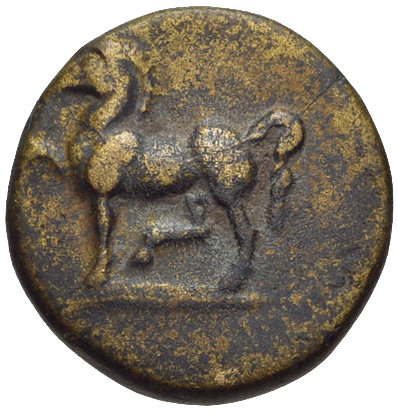 Obverse
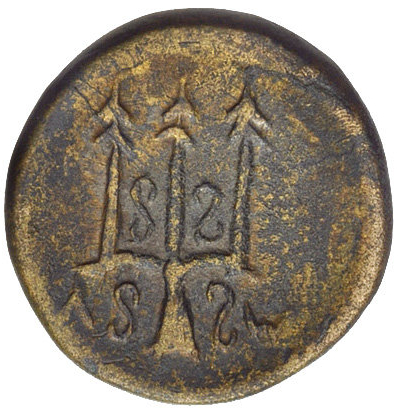 Reverse
Design Features
The Mylasa Æ12 coin stands out with its elaborate designs, which are emblematic of the artistry of the period.
- Obverse Design: The obverse of the coin features a horse prancing left, a common motif in ancient Greek coinage symbolizing strength and nobility. The depiction of the horse is detailed, capturing the elegance and dynamism of the animal. The presence of a groundline adds depth and perspective to the design.
- Reverse Design: The reverse presents a striking image of a trident head pointing downwards, flanked by the Greek letters "Μ" and "Υ." The trident, with its double edges and spiral decorations, is a symbol often associated with Poseidon, the Greek god of the sea. This design element not only signifies the maritime prowess of Mylasa but also reflects the religious and cultural influences of the time.
Technical Specifications
Understanding the technical aspects of the Mylasa Æ12 coin is crucial for collectors and historians. The coin is composed of bronze, a material commonly used in ancient coinage for its durability and workability. It measures 12.00mm in diameter and weighs approximately 1.64 grams. These specifications reflect the standard practices of minting during its period, providing insights into the technological capabilities of ancient Mylasa.
Collectible Value
The Mylasa Æ12 coin is a sought-after piece among collectors due to its historical and artistic significance. Its rarity and well-preserved condition can significantly impact its market value. Coins from Mylasa, particularly those featuring unique designs such as the trident, are considered valuable additions to any collection of ancient Greek currency. The coin's condition, provenance, and demand in the numismatic market further influence its collectible value.
Conclusion
In conclusion, the Mylasa Æ12 bronze coin is more than just an ancient currency; it is a testament to the cultural and economic vitality of Mylasa. Its intricate designs and historical context make it a remarkable artifact for collectors and scholars. Whether you're a seasoned numismatist or a history aficionado, the Mylasa Æ12 coin offers a fascinating glimpse into the past, illustrating the enduring legacy of ancient Greek civilization.

ScanMyCoin: AI Coin Recognition
Professional AI coin recognition and collection management platform. Identify, learn, and track your coin collection with advanced AI technology and a vast.